LaMonica McIver and the “Lock Her Up” President: A Power Play
Congresswoman LaMonica McIver Faces Federal Charges Amid Controversy
The United States appears to be experiencing a significant political crackdown, with some analysts suggesting it signals a slide toward authoritarianism. A key event in this narrative involves Congresswoman LaMonica McIver, who faces serious federal charges following a contentious incident at a New Jersey immigration detention facility.
In May, McIver was part of a congressional oversight delegation visiting Delaney Hall, a detention center in Newark suffering from reports of inhumane conditions. During this visit, federal officers abruptly attempted to arrest Newark Mayor Ras Baraka, prompting a chaotic scene. McIver, along with other officials, was accused of interfering with law enforcement, after officers forcibly detained the mayor during their presence. Initially, charges against Baraka were dropped, but McIver was subsequently federally charged with three counts of assaulting and obstructing officers.
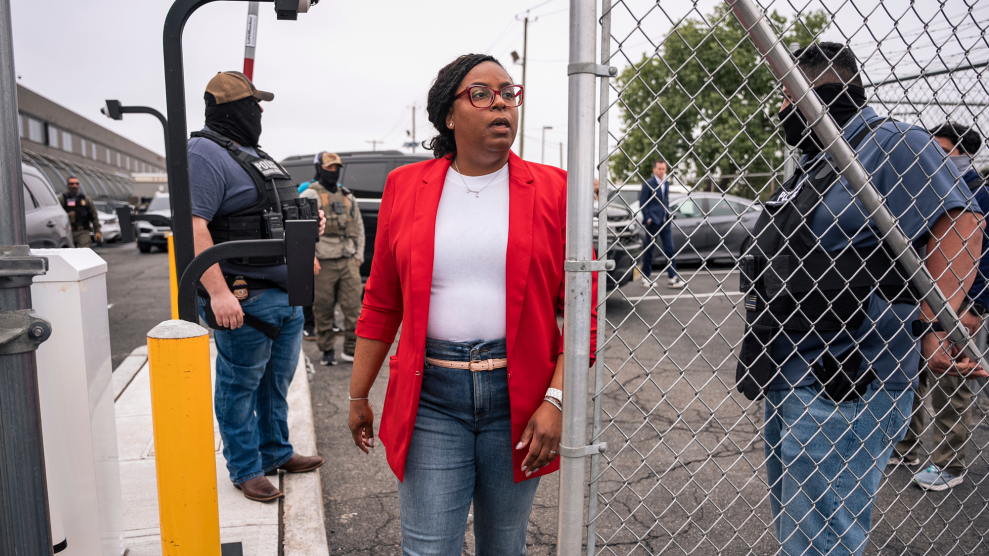
Congresswoman LaMonica McIver, D-N.J., exits the grounds at Delaney Hall, an ICE detention facility, May 9 in Newark, N.J.Angelina Katsanis/AP
The charges against McIver appear politically motivated, especially considering her vocal stance and her status as a young, Democratic representative. Critics, including Mayor Baraka, argue that the federal authorities’ actions resemble overt political retribution rather than legitimate law enforcement. Baraka remarked that the federal agents’ conduct was “stupid” and that they lacked evidence, suggesting the charges are an attempt to “save face.”
The case echoes historic instances where political figures were prosecuted for their activism, dating back to the late 18th century. The ongoing legal battle highlights concerns about the misuse of federal power to suppress political opposition. Meanwhile, McIver is defending herself through legal channels, but the case has incurred significant costs, as she is paying legal fees from her campaign funds.
Many view these developments as troubling indicators of democratic erosion, where political persecution and abuse of legal processes threaten the core principles of justice and political freedom. Should the case proceed to trial, it could intensify fears that political opponents are at risk of being targeted through weak evidence and law enforcement backing—an alarming trend reflecting the broader shift toward authoritarian tactics in the current political climate.