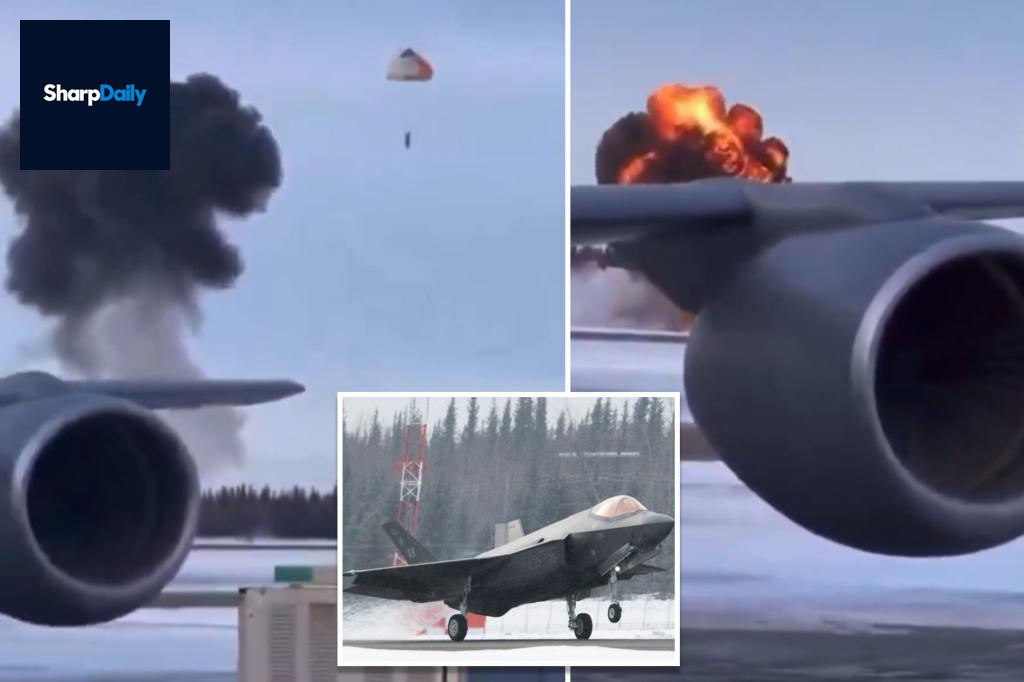
F-35 Pilot Conducts Hour-Long Mid-Air Conference Call to Prevent Crash
Mid-Air Conference Call Leads to F-35 Crash and Pilot Ejection
An incident involving a $200 million F-35 fighter jet occurred at Eielson Air Force Base in Alaska, where a pilot spent nearly an hour on a conference call with engineers to troubleshoot a critical issue. Despite their efforts, the aircraft ultimately crashed onto the runway and caught fire, forcing the pilot to eject safely.
The crash was caused by ice buildup in the hydraulic lines of the nose and main landing gears, which prevented proper deployment. After takeoff, the pilot attempted to retract the landing gear but was unsuccessful. When trying to lower it again, the gear jammed at an awkward angle, reacting as if it were in contact with the ground, which led to the aircraft becoming uncontrollable.
During the descent, the pilot engaged in a 50-minute communication with five Lockheed Martin engineers, trying to resolve the malfunction. Several “touch and go” landing attempts failed, and the landing gear froze completely. As sensors indicated the jet was on the ground, its controls became unresponsive, leaving the pilot no choice but to eject moments before impact.
An inspection revealed that about one-third of the hydraulic fluid in the affected systems was water, contributing to the icing problem. Interestingly, a similar hydraulic icing issue occurred at the same base nine days later during a different flight, but that aircraft managed to land without incident. The crash happened during extremely cold temperatures of -1°F.
The investigation blamed the accident partly on decision-making during the flight and insufficient oversight of hazardous materials management. The incident has renewed scrutiny over the aircraft’s reliability, which has been questioned amidst concerns over cost-cutting and manufacturing practices.
In recent years, the cost of the F-35 has decreased from approximately $135.8 million to about $81 million per unit. However, the program is projected to continue until 2088, with total costs expected to exceed $2 trillion.