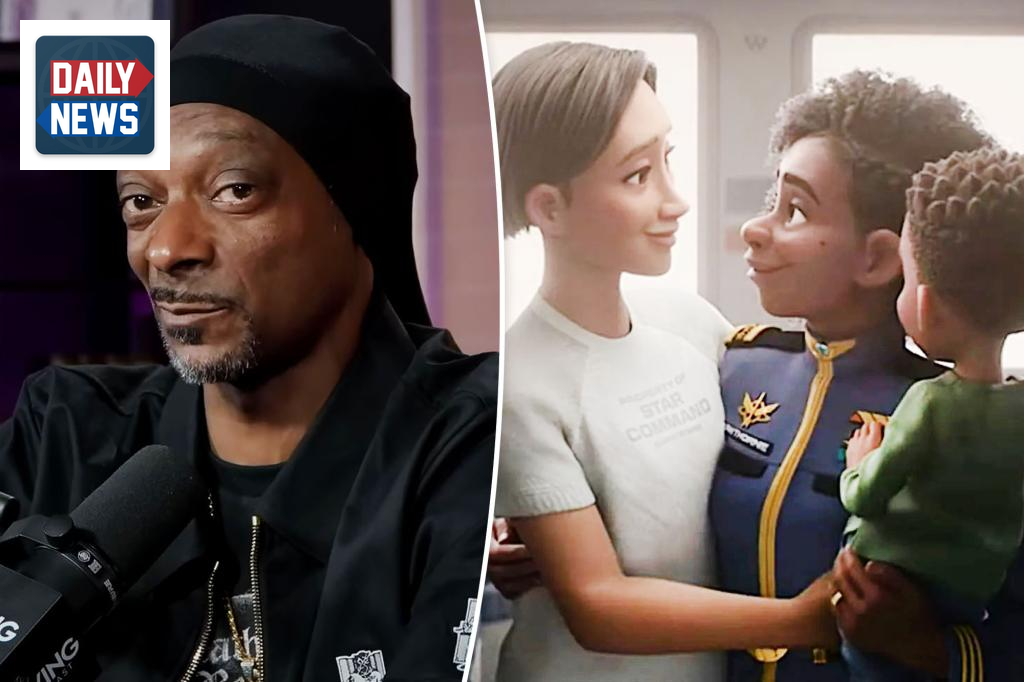
Snoop Dogg Criticizes LGBTQ+ Representation in Kids’ Movies
Snoop Dogg Voices Concerns Over LGBTQ+ Themes in Children’s Films
Rapper Snoop Dogg has expressed criticism of the increasing presence of LGBTQIA+ storylines in children’s movies, following an experience watching a Pixar film with his grandson. The film, which includes a depiction of a same-sex couple, drew his attention to what he perceives as overrepresentation.
On a recent podcast, Snoop remarked, “What you see is what you see. They’re pushing it everywhere,” highlighting his discomfort with such content being shown to young audiences.
Experience Watching “Lightyear”
Snoop shared that he took his grandson to see the 2022 Pixar movie Lightyear, where a scene features a lesbian couple welcoming a child. He recounted his grandson’s question during the film: “Papa Snoop? How does she have a baby with a woman? She’s a woman!”
The rapper admitted, “I didn’t come in for this. I just wanted to watch the movie,” adding that he was caught off guard by the scene’s inclusion and the questions it raised. “Y’all are throwing me into situations I don’t have answers for,” he said.
Dealing with the Question
Instead of engaging with his grandson’s curiosity, Snoop chose to ignore it, telling him to focus on his popcorn. He reflected, “I’m like, ‘What part of the movie was this?’ These are kids, and they’re going to ask questions. I don’t have an answer.”
Controversy Surrounding LGBTQ+ Representation
The scene, which depicted a kiss between characters Alisha Hawthorne and her wife — voiced by Uzo Aduba — marked a historic moment for Pixar as the first gay kiss in a feature film. It was briefly cut following backlash but was reinstated after protests from Disney and Pixar employees against censorship of LGBTQIA+ content.
The inclusion of this storyline led to the film being banned in several Middle Eastern countries, including Saudi Arabia, the UAE, and Egypt.
Snoop Dogg’s comments reflect ongoing debates about how such themes are presented in media aimed at children, emphasizing differences in perspectives on age-appropriate content.