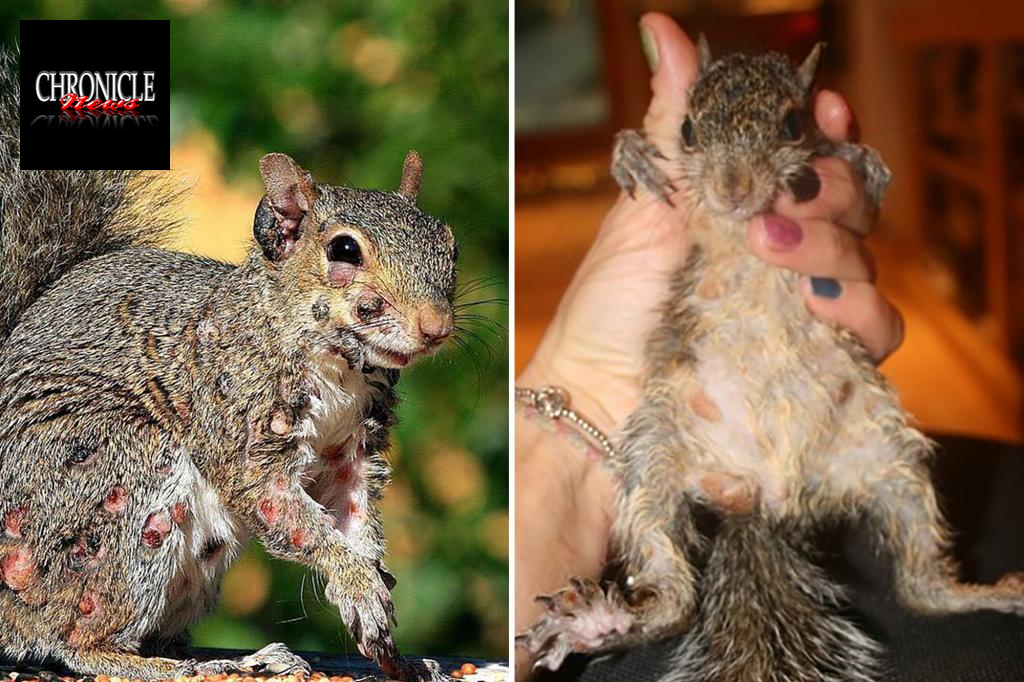
Zombie Squirrels with Warts Spotted in U.S. Backyards
Spotted Squirrels with Tumors Raise Concerns Amid Rising Sightings
Recently, images of gray squirrels covered in pustular, wart-like growths have been circulating across various backyards in the United States and Canada. These creatures exhibit oozing wounds and hairless patches on their heads and limbs, causing alarm among observers.
The phenomenon has been documented since mid-2023, with a notable increase in sightings during the summer months. Many have taken to social media platforms like Reddit and X to share their encounters, leading to the nickname “zombie squirrels” by some.

Wildlife reports
One social media user recounted observing a squirrel with a tumor on its mouth, noting initially dismissing it as food debris but later realizing it was a worrying lesion. Although some have dubbed these animals “zombies,” experts suggest they are suffering from squirrel fibromatosis, a skin disease caused by a virus similar to those causing warts in humans.
This virus, the leporipoxvirus, spreads through direct contact with saliva or lesions from infected squirrels, often during social interactions or via contaminated feeding areas. It is sometimes confused with squirrelpox, which is more prevalent in the UK and can be fatal.
While the tumors appear severe, they typically resolve naturally in four to eight weeks, though severe cases may impact internal organs and lead to death. Authorities emphasize that these infected squirrels do not pose a threat to humans, pets, or birds.

Wild Things Sanctuary
Wildlife specialists advise against capturing or disturbing these animals, as they are expected to recover on their own. The increase in sightings may be linked to common backyard bird feeders, which can facilitate virus transmission if contaminated with infected saliva or fluids during feeding.
In related news, a different viral outbreak is impacting cottontail rabbits in Colorado, leading to the appearance of black, tentacle-like tumors. This condition is caused by the cottontail papillomavirus, which results in tumors around the animals’ heads, further highlighting the increasing presence of wildlife diseases.