NYC Air Quality Drops Sharp as Canadian Wildfire Smoke Swirls In
Hazy Weather and Poor Air Quality Persist Due to Canadian Wildfires
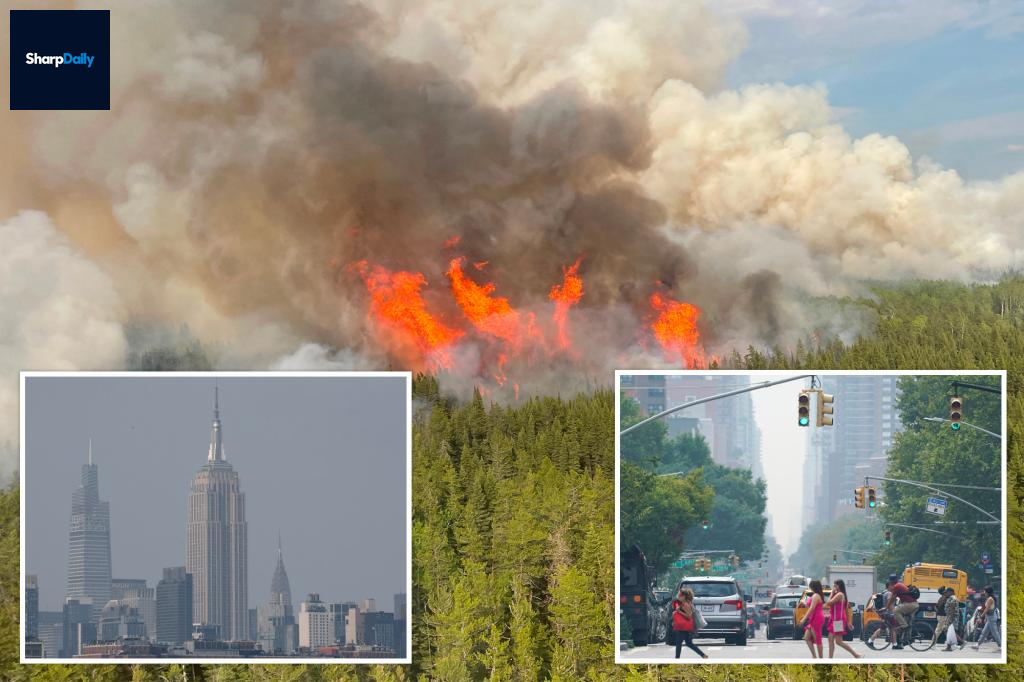
Residents of New York City experienced a second consecutive day of smoky, hazy conditions, with forecasts warning that this adverse weather pattern will continue through the upcoming week. The primary cause is the ongoing wildfires in Canada, where over 550 fires are burning across Manitoba alone, and 15 million acres have been consumed nationwide. Smoke from these fires has started drifting into the Northeastern United States.
The air quality index (AQI) climbed above 100—considered a warning level—persistently indicating unhealthy conditions, especially dangerous for vulnerable groups such as the elderly and those with respiratory issues. People are advised to limit outdoor activities.

Experts warn that while air quality might slightly improve later today, it could deteriorate again early in the week, particularly as temperatures rise to oppressive levels. AccuWeather Senior Meteorologist Tom Kines mentioned, “The air quality could decline again starting Tuesday and into Wednesday.” He advised those with health issues like asthma to exercise caution.
With a heat advisory in effect, the heat index in parts of the Northeast could reach 105 degrees, further compounding air quality problems. Many residents reported feeling the effects firsthand.
Brooklynite Nehemiah Bounds, 27, said he was feeling light-headed and nauseous, noting, “The air does feel heavier. I won’t be out as long today because of the haziness.” Similarly, Eray Akil, out with his family, described the sensation as akin to allergies.

Localized air quality measurements reported AQI levels of 133 in Bed-Stuy, Brooklyn, and 132 outside Flushing Park in Queens. According to the Environmental Protection Agency, values above 150 are deemed unhealthy. The smoke’s presence was visually evident — landmarks like the Statue of Liberty and Empire State Building were barely visible from Brooklyn Bridge Park due to the haze.
Meteorologists warn that this is likely an ongoing issue with wildfires still burning in Canada, suggesting more smoke could drift into the region in the future.