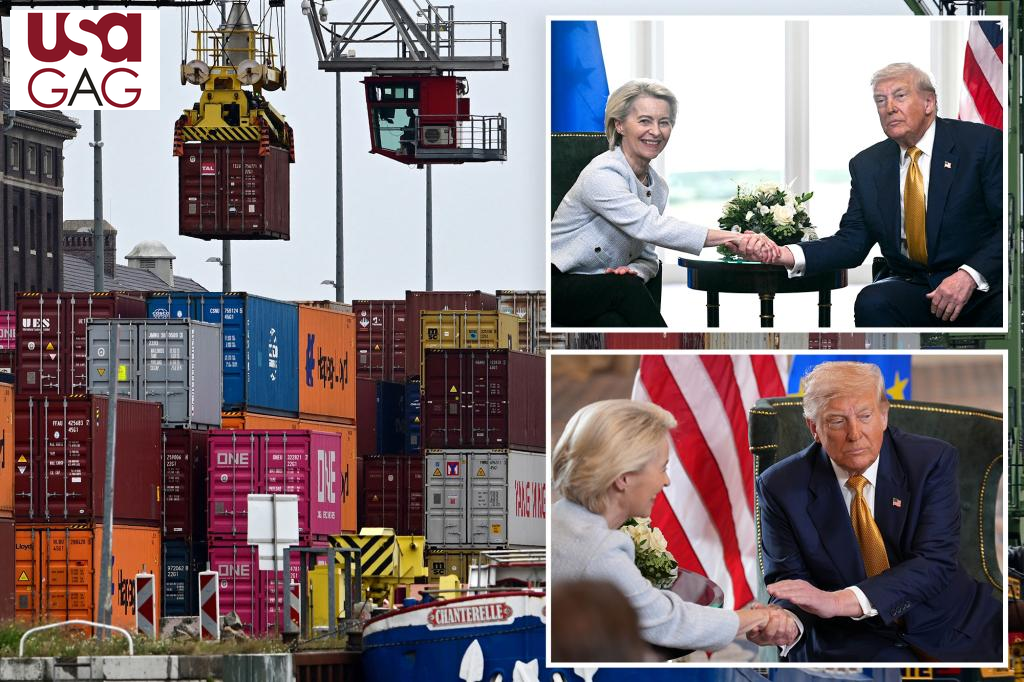
Trump Announces $1.6T Deal with the EU and 15% Tariffs
Trump Secures Favorable Trade Agreement with Europe
In just 75 minutes, President Trump and European Commission President Ursula von der Leyen negotiated a preliminary trade deal. Trump emerged confident, announcing that Europe will purchase $750 billion worth of American energy products, invest $600 billion in the U.S., and buy additional U.S. military equipment.
The agreement proposes reducing tariffs on many American exports to zero, while increasing duties on most European goods entering the U.S. to 15%. Most European imports will face a 15% tariff, though some strategic products like aircraft, chemicals, and raw materials will benefit from zero tariffs.

Trump called the deal the “biggest ever made,” emphasizing a significant rebalancing of trade relations, which historically favored Europe with a trade deficit of $235 billion last year. The agreement aims to avoid a potential trade war among two economies accounting for about 44% of global GDP.
Trump highlighted that European countries agreed to cut tariffs on autos, which were previously set at 27.5%, and to allow free trade on crucial products such as aircraft parts and raw materials. While Europe proposed a tariff of 10% for the U.S., the final agreement maintained most duties at 15%.

Additionally, the deal includes plans for a quota system on steel and aluminum, though details remain unspecified. Trump expressed optimism about the deal benefiting American auto manufacturers and farmers, predicting substantial gains for them.
Before the announcement, both leaders considered the likelihood of reaching an agreement to be about 50%. Negotiations were described as challenging, with visible tension before a consensus was achieved.
Lawmakers in the U.S. praised the deal. Rep. Ashley Hinson called it a “historic trade victory,” while Commerce Secretary Howard Lutnick highlighted the opening of Europe’s $20 trillion market to American standards.
Trump emphasized that he has no plans to delay the August 1 tariffs and also warned about ongoing negotiations with other countries, including Japan, Vietnam, and China, as well as ongoing discussions with Russia regarding energy sanctions.