Utility Crew Uncovers 11,000-Year-Old Giant Ground Sloth Fossil in Florida
Florida Utility Crew Discovers 11,000-Year-Old Giant Ground Sloth Fossil
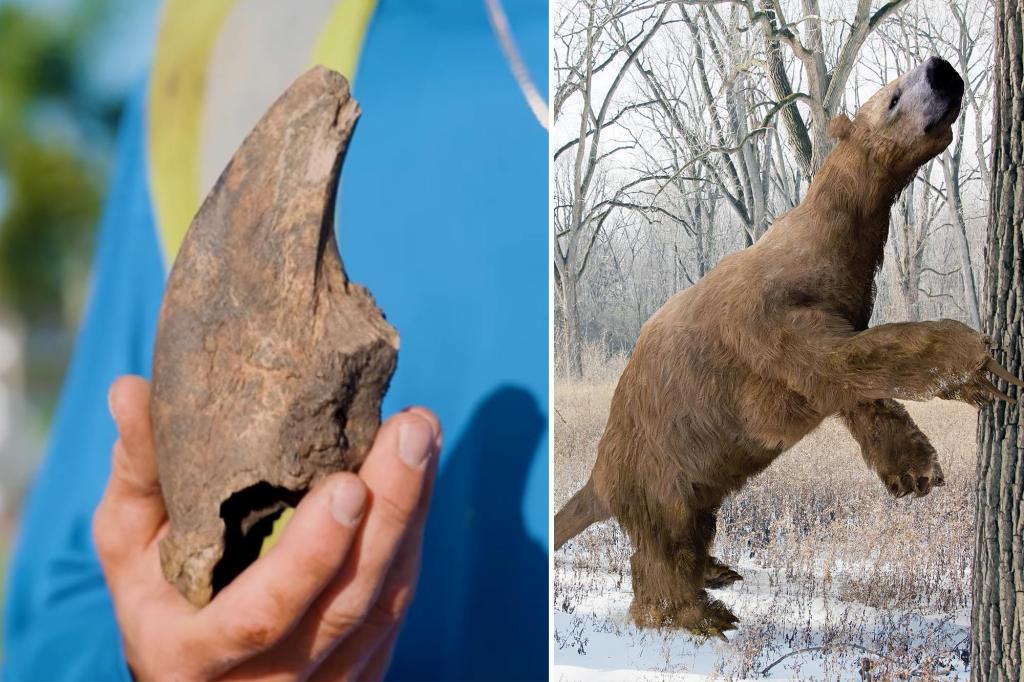
During routine work installing a waterline in Manatee County, Florida, a utility crew unearthed a fossilized claw belonging to a giant ground sloth that lived approximately 11,000 years ago. Originally named by Thomas Jefferson, this species, Megalonyx jeffersonii, was first identified after fossils were found in West Virginia in 1797.
The team initially thought they had found an ordinary tool but soon realized it was a significant paleontological find. The fossilized claw is from a medium-sized member of the species, which was notable for its large size—these animals weighed up to 800 pounds, with some of the largest reaching 8,000 pounds and standing about 13 feet tall. Ground sloths of this size were characterized by a blunt snout, peg-like teeth, and three sharp claws, which they used for defense and feeding on high vegetation.
Geologists explain that these animals migrated from South America into North America through Texas and Mexico, thriving in lush tropical forests during the Great Ice Age. Although most ground sloth fossils are found in the western U.S. and Alaska, discoveries on the East Coast are rare, making this find particularly valuable. The fossil has been transferred to a nearby science and nature museum for preservation and future display.

The discovery highlights the fascinating and sometimes unexpected paleontological treasures hidden beneath our feet, providing insight into a time when Florida was a tropical jungle inhabited by these massive creatures.
