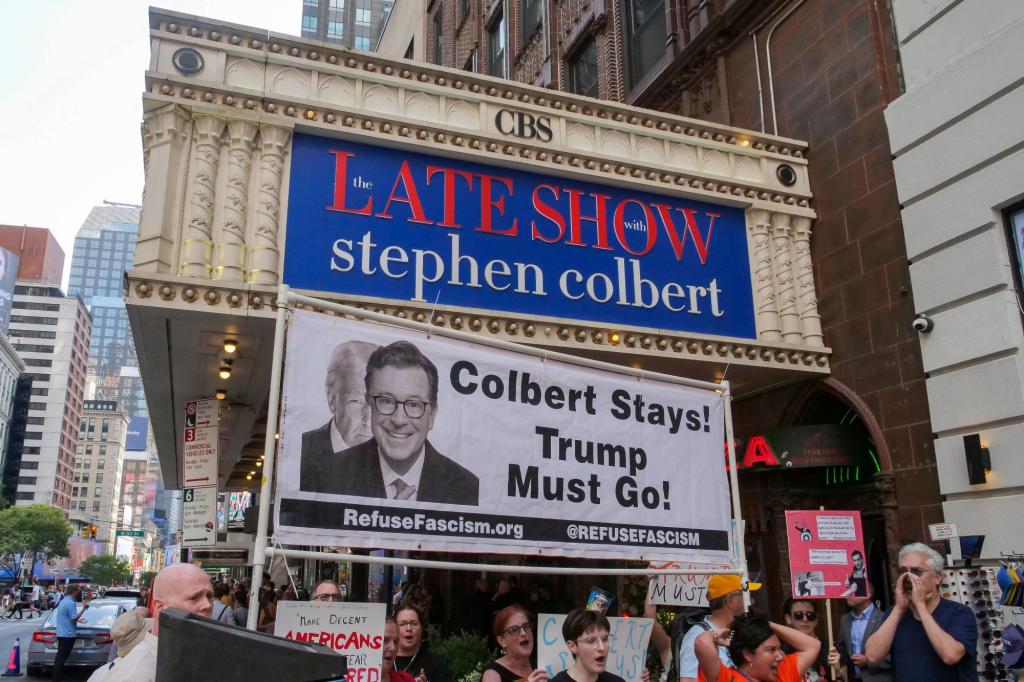
Colbert Fans’ Cancellation Hysteria Hits New Heights
The Cancellation of Stephen Colbert’s Show Sparks Conspiracy Theories
The recent cancellation of The Late Show with Stephen Colbert has led to widespread speculation and conspiracy theories. CBS decided to end the show, which reportedly loses around $40 million annually, after Colbert’s contract was nearing its end and viewership declined significantly. Despite leading in its timeslot, the show’s high production costs — estimated at $100 million per year — and aging audience, with an average viewer age of 68, made renewal unlikely.
Some critics suggest that Colbert’s political persona, which shifted from a parody conservative to more openly aligned with Democratic views, contributed to declining ratings. The show’s costs and changing audience demographics point to its slow demise, in line with a broader decline in late-night television popularity.
However, a popular conspiracy theory among Democrats alleges that Trump’s influence over regulatory agencies and potential corporate mergers are behind the decision. Critics argue that CBS’s merger discussions with companies linked to Trump supporters, combined with Colbert’s critical commentary on Trump, suggest political motives. Prominent Democratic figures, including Senator Adam Schiff, Bernie Sanders, and Elizabeth Warren, publicly questioned the timing of the cancellation, implying political bias without concrete evidence.
Media personalities like Brian Stelter have fueled these theories, emphasizing connections to the pending merger and suggesting that economic considerations were secondary to political pressures. Notably, Colbert’s earlier success stemmed from satirical conservative characters; his transformation into a political advocate may have alienated viewers, hastening the show’s decline.
Despite claims of censorship and anti-speech allegations, industry data shows that late-night television is struggling overall, with audience demographics shifting and ad revenues diminishing. The market forces, rather than political interference alone, appear to be the primary drivers behind the show’s cancellation. As the industry evolves, the fate of Colbert’s program serves as a case study in the changing landscape of television entertainment.