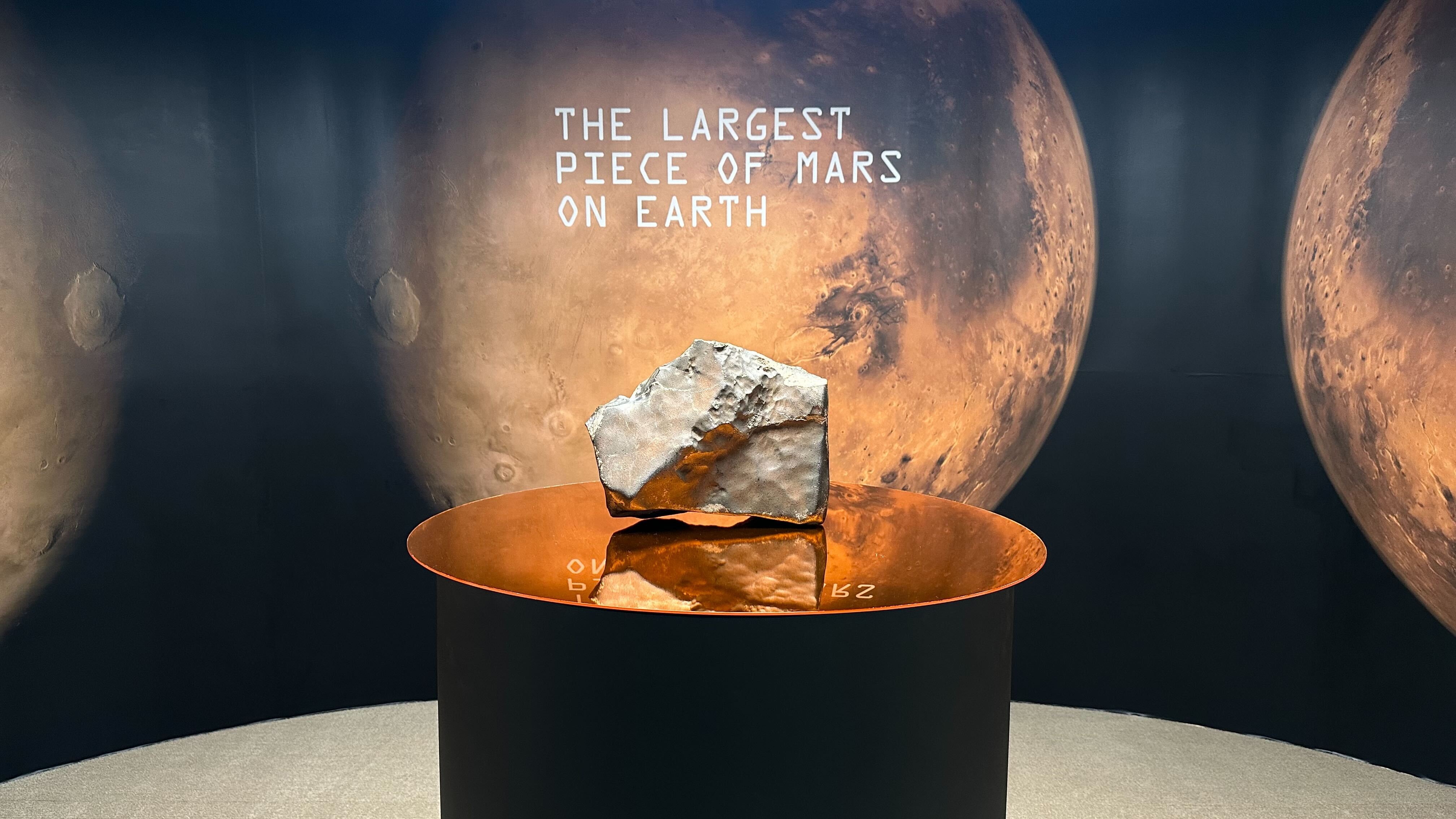
Largest Martian Meteorite on Earth Sells for $4.3 Million
Largest Mars Meteorite Sold at Auction for $4.3 Million
A significant Mars meteorite, weighing about 54 pounds (25 kilograms), was auctioned at Sotheby’s in New York for $4.3 million. The specimen, known as NWA 16788, was discovered in Northwest Africa. Despite initial estimates reaching up to $4 million, the final sale price exceeded expectations, including additional fees bringing the total to approximately $5.3 million.
This meteorite is remarkable not only for its size—about 70% larger than the next-largest Martian meteorite found on Earth—but also for its appearance, which closely resembles the Martian surface. Most other Martian meteorites are tiny slices, making this specimen unique in both form and visual similarity to Mars. Smaller samples from Mars typically sell for between $20,000 and $80,000.
The identity of the buyer remains private, as many collectors prefer anonymity due to safety concerns or personal reasons. Some choose to donate or display their finds publicly, while others prefer to remain undisclosed.
In addition to the meteorite, the auction featured a range of rare fossils and objects. Highlights included a juvenile Ceratosaurus skeleton from around 154-149 million years ago, which fetched $26 million. Other notable items included a 67-million-year-old Tyrannosaurus Rex foot sold for $1.4 million, a Megalodon Shark tooth for $18,000, a Neanderthal tool set for $45,000, and a vivid blue Aquamarine gemstone sold for $75,000.
During an interview, Sotheby’s vice chairman Cassandra Hatton emphasized that auction prices are driven by bidder interest, not just estimates. For example, she previously sold a collection of objects related to notable scientists and figures, with prices surpassing initial projections significantly.
Hatton also discussed the complexities of auctioning scientific objects, suggesting that monetary value can motivate collectors to preserve and donate items to public institutions. Many collectors, she noted, donate or allow displays in museums and contribute funds to support research and preservation, including postdoctoral studies.
To confirm the meteorite’s Martian origin, a small sample was analyzed and documented in the meteoritical bulletin, ensuring its authenticity for scientific study.