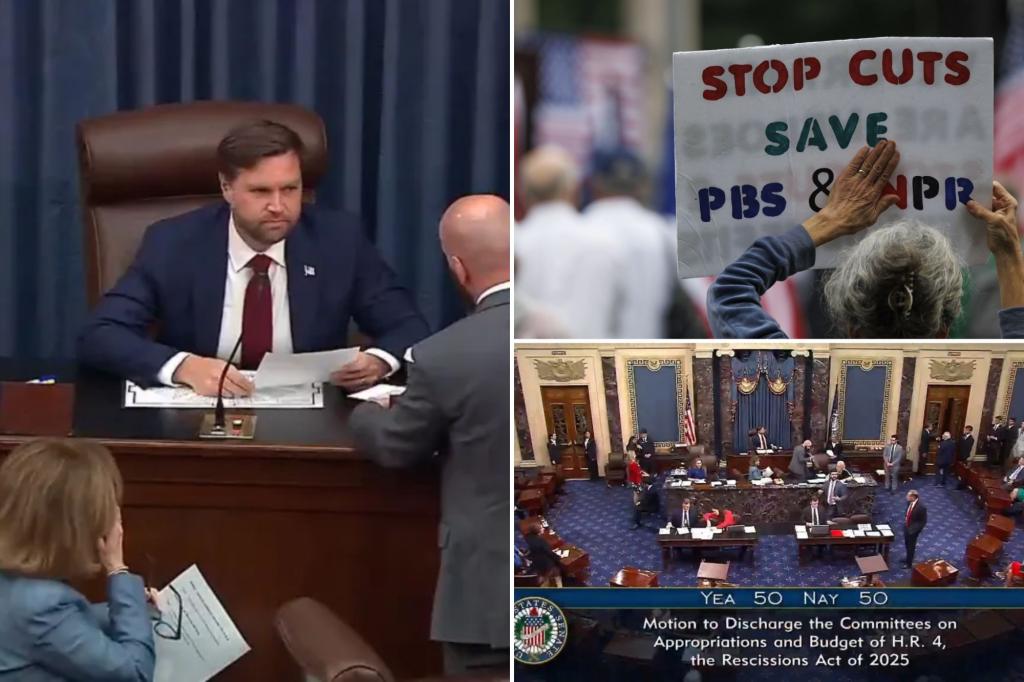
Vance Breaks Tie to Advance $9.4B Rescissions, Defunding PBS & NPR in Senate
Senate Advances $9.4 Billion Funding Cuts with Tie-Breaking Vote
In a pivotal decision, Vice President JD Vance cast a tie-breaking vote to progress a $9.4 billion budget rescissions package through the Senate. This legislation aims to roll back funding for public broadcasting entities like PBS and NPR, with about $8.3 billion previously allocated to international aid and $1.1 billion to the Corporation for Public Broadcasting.
The Senate vote was closely contested, ending in a 50-50 deadlock before Vance’s decisive vote broke the tie. The measure, already approved by the House, now moves to detailed Senate debate, where at least 10 hours are scheduled for discussion and amendments. The final version of the bill will then be subject to a vote.
Notably, three Republican senators—Mitch McConnell, Lisa Murkowski, and Susan Collins—opposed the bill, aligning with the entire Democratic caucus. Collins expressed concerns about the lack of transparency, stating that the Office of Management and Budget (OMB) had not specified which programs would be affected by the cuts. She flagged proposed reductions to crucial programs such as the Development Assistance account, which supports education, sanitation, and food security initiatives, asserting that the full impact remains unclear.

Collins also criticized the proposed reductions to public broadcasting, calling them excessive and expressing concern over potential loss of popular programs and local coverage. She emphasized the importance of knowing exactly which programs would be affected and the consequences of such rescissions.

The bill still requires final approval from the Senate before moving back to the House, which might consider amendments based on Senate revisions.